Why Do Animated Movies Have So Many Talking Animals?

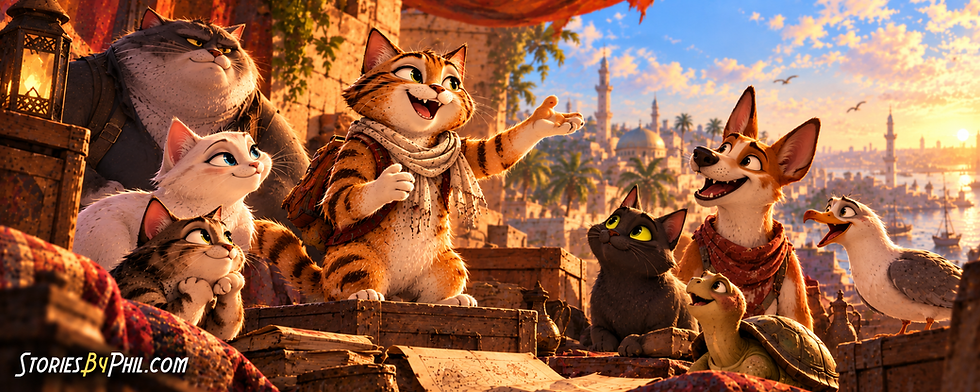
Mickey Mouse. Bugs Bunny. Simba. Nemo. Po. Remy. Judy Hopps.
Animation has spent the better part of a century turning animals into movie stars. They talk. They fall in love. They raise families. They get jobs. They cook. They practise kung fu. Some of them even wear trousers, although thankfully Simba was spared that indignity.
So why do animated movies have so many talking animals?
The obvious answer is that audiences like them. But that doesn't really explain anything. Audiences like plenty of things that haven't produced nearly a century's worth of movies about foxes, bears, rabbits, rats, lions, fish and assorted household pets behaving suspiciously like us.
There's actually a word for what animation has been doing all this time: anthropomorphism. And once you start looking at how animated movies use it, something becomes apparent. The best animal characters usually aren't animals simply because animals are cute.
There's a reason they're animals in the first place.
What Is an Anthropomorphic Animal?
Anthropomorphism means giving human characteristics to something that isn't human. In an animated movie, that might mean an animal that talks, thinks, experiences recognisably human emotions or behaves like a person.
But there are degrees.
Bambi talks, but he still lives in a forest and behaves substantially like a deer. Nemo talks, goes to school and has a rather anxious father, but he's still unmistakably a fish. Remy from Ratatouille is a rat with an extraordinarily human ambition: he wants to become a chef.
Then there's Zootopia, where animals wear clothes, use mobile phones, work in offices, run businesses and operate a police department. By that point, the animals haven't simply been given human personalities. They've built an entire civilisation.
All of these characters are anthropomorphic. The interesting question is how far filmmakers decide to take it.
Why Are Animals So Common in Animation?
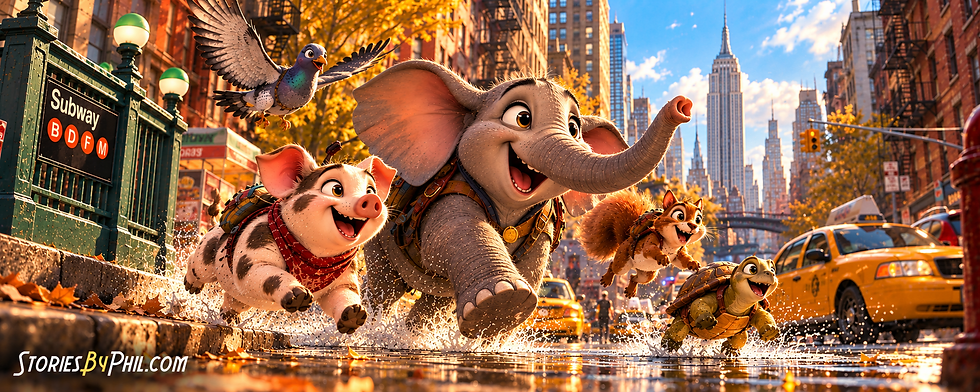
Animals and animation have been together almost from the beginning. Felix the Cat became a star of silent animation in the 1920s, followed by Mickey Mouse, Donald Duck, Bugs Bunny and countless others.
Part of the attraction seems obvious. Animation isn't restricted by reality.
Put a talking rabbit into a live-action police drama and somebody is going to have some explaining to do. Put one into an animated movie and we accept it almost immediately. Animation already asks us to believe in drawings, models or digitally created characters coming to life. A talking animal isn't much of an additional leap.
That freedom gives filmmakers an enormous toy box. Animals can talk, wear clothes and live in houses while still retaining whatever characteristics of the real animal are useful. A bird can fly. A cheetah can run. A turtle can be slow. A cat can climb somewhere a human can't.
And because the filmmaker controls every aspect of the character's appearance, movement and world, the animal can be pushed toward humanity or pulled back toward nature depending on what the story needs.
That's something animation can do extraordinarily well.
Are Animals Easier to Animate Than Humans?
Not really. A highly stylised animal can certainly give an animator freedoms that a realistic human character doesn't. Proportions can be exaggerated. Faces can be redesigned to make emotions easier to read. Bodies can stretch, squash and move in ways we'd find unsettling if a realistic human did the same thing.
But animals bring their own problems. A horse doesn't move like a human. Neither does a bird, fish or quadruped. Different skeletons, proportions and methods of locomotion all have to be understood before an animator can decide how much to exaggerate them.
And the more realistic the animal, the less forgiving the audience becomes. We've all seen animated creatures where something about the movement feels wrong even if we can't quite explain why.
So the enduring popularity of animal characters can't be explained simply by saying they're easier to animate.
The better explanation may be that they're more flexible to animate. Filmmakers can decide how much animal and how much human they want.
Which brings us to the more interesting question...
Why Use an Animal Instead of a Human Character?
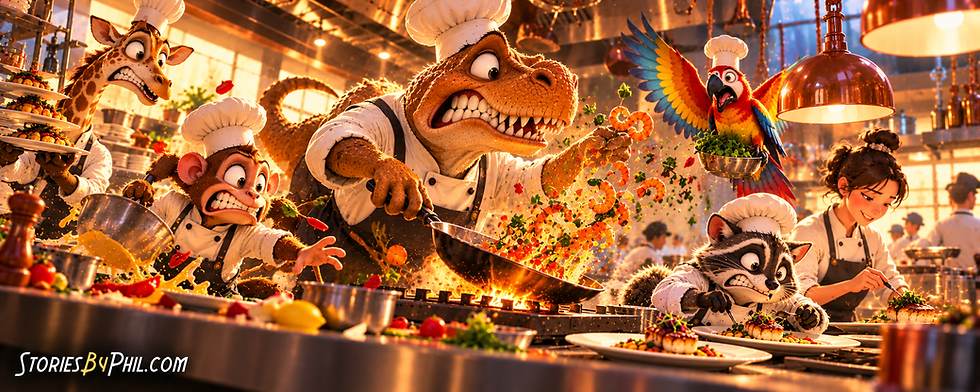
Consider Ratatouille.
Remy wants to become a chef. Pixar could theoretically have told a story about a young human nobody believes belongs in a prestigious Paris restaurant.
But making Remy a rat transforms the idea.
A rat doesn't merely lack the qualifications to work in a restaurant. A rat is one of the last creatures anybody wants to discover in one. Remy's species creates the central contradiction of the movie: he has the talent and passion to belong in the kitchen while being biologically disqualified from entering it.
The same principle works differently in Kung Fu Panda. Po desperately wants to become a great kung fu warrior, but he's a large, clumsy panda surrounded by sleek, highly trained fighters. His physical nature is part of the joke, but it also becomes part of his journey.
Then there's Judy Hopps in Zootopia. Making her a rabbit gives the filmmakers something a generic human character wouldn't provide. Other characters make assumptions about her because she's small and belongs to a species associated with timidity and vulnerability. Judy's determination to become a police officer immediately pushes against those expectations.
Animals arrive with baggage. Lions seem powerful. Foxes have a reputation for cunning. Rabbits appear vulnerable. Turtles are slow. Dogs are loyal. Cats are independent. Filmmakers can use those associations, exaggerate them or deliberately turn them upside down.
That's why asking “Why isn't this character human?” can be such a useful question.
If the answer is simply “because an animal is cuter,” there may be more work to do.
Why Do We Identify With Animals That Behave Like People?
There's something peculiar about watching Finding Nemo. Nobody in the audience has been a clownfish desperately searching the Pacific Ocean for a missing son. And yet Marlin's fear is immediately understandable.
That's the trick. Animated animals can be physically unlike us while remaining emotionally familiar.
Animators help enormously. Animal faces and bodies can be adjusted so that expressions are readable to humans. Eyes, eyebrows, mouths, posture and gestures can communicate emotions in ways that a completely realistic version of the animal might not. But the writing has to do its share too.
Simba isn't relatable because we know what it's like to be a lion. He's relatable because we know what guilt, fear, family and responsibility are. Po's problem isn't really that he's a panda. It's that he wants desperately to be something he isn't sure he's capable of becoming.
The animal creates distance from reality while the emotion closes the distance again.
That combination can be remarkably powerful. We're watching something that obviously isn't us while recognising ourselves in it anyway.

How Human Should an Animated Animal Be?
There's no single answer, and that's part of what makes animal characters so useful.
Finding Nemo keeps much of its world recognisably aquatic. The characters talk and behave emotionally like people, but they're still fish navigating reefs, currents, predators and aquariums.
The Lion King goes further into human behaviour. Its lions have family relationships, political struggles, succession disputes and moral responsibilities, but Pride Rock is still an animal kingdom rather than a human society with paws attached.
Ratatouille creates an interesting divide. Remy thinks and feels like a person and understands human culture, but the fact that he's physically a rat remains essential to almost every problem he faces.
Then Zootopia pushes anthropomorphism much further. Its animals have jobs, clothes, transport systems, bureaucracy and technology. The entire human world has effectively been rebuilt around different species.
None of those approaches is inherently better than another. What matters is consistency and purpose.
If an animal suddenly behaves like an animal whenever the plot needs it and like a human whenever that's more convenient, audiences may start noticing the machinery. But when filmmakers establish the rules properly, we tend to accept almost anything.
Apparently even a rat controlling a chef by pulling his hair.
CATSAWAY: When Does a Cat Need to Behave Like a Cat?
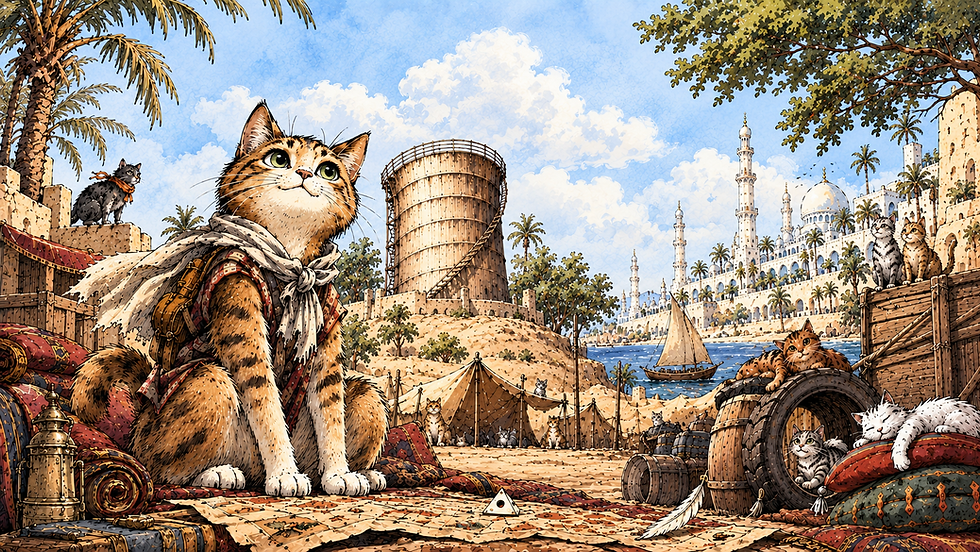
Some of these questions came up while screenwriter Phil Parker was developing CATSAWAY, an animated feature project created by Emirati filmmaker Fadel AlMheiri.
Fadel came to Phil with a short concept and rough character sketches of street cats in Abu Dhabi. Phil's job was to take that early material and develop it into a 30-page feature-film treatment.
That meant the cats obviously needed the things movie characters need: personalities, relationships, desires, conflicts and choices. An audience has to understand what they want and care about whether they get it.
But they're still cats. And that matters.
If Phil gave them completely human behaviour, human problems and human solutions, then simply drew whiskers and tails on them, he'd be throwing away one of the most interesting things about the premise.
Their size matters. Their physical abilities matter. Their vulnerability in a human city matters. Their relationship with people matters. The way they move through Abu Dhabi is fundamentally different from the way a human character would move through it.
That's where the best animated animal characters find their sweet spot. They become human enough for us to understand them without becoming so human that their species stops mattering.
Remy has to be a rat.
Judy Hopps has to be a rabbit.
Nemo has to be a fish.
And the heroes of CATSAWAY have to be cats.
Otherwise, why not just write humans?
Learn more abou CATSAWAY, an animated family adventure developed by screenwriter Phil Parker.


