Time Travel Paradoxes in Movies

How Do They Work?
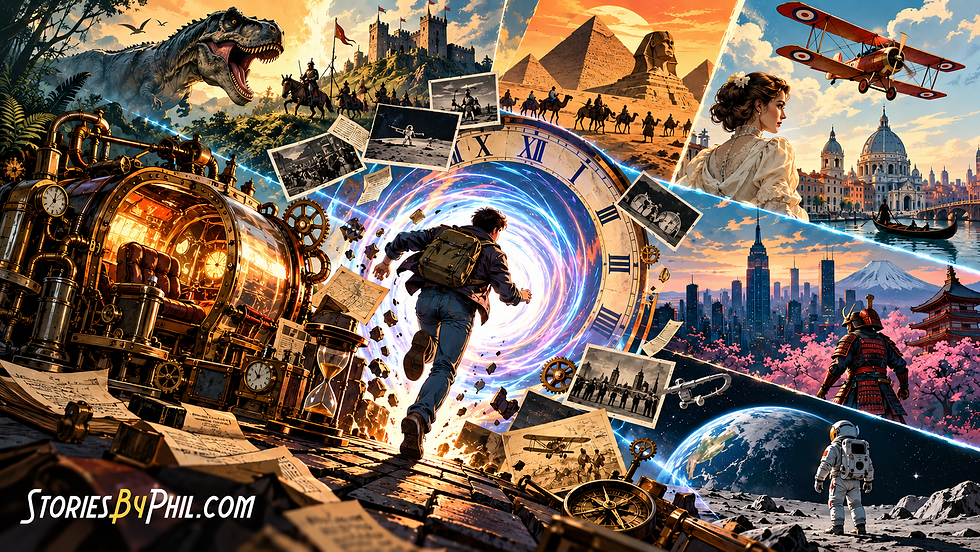
Here's the problem with time travel. The minute you invent it, you start causing problems.
Suppose I travel back to yesterday and stop myself from writing this article. If I don't write the article, why would I travel back to stop myself writing it? And if I don't travel back, I do write it. Which means I have to travel back to stop myself.
My head hurts already.
Movies have been tying themselves into these knots for decades. Sometimes the paradox is a problem the characters have to solve. Sometimes it's the entire premise of the movie. And sometimes you don't realize you've been watching one until the final scene suddenly makes everything that happened before it look completely different.
The names can sound complicated: Grandfather Paradox. Bootstrap Paradox. Predestination Paradox. Causal Loop. But the ideas themselves are surprisingly easy to understand. At least until you start thinking about them. Then you're in trouble.
What Is a Time Travel Paradox?
Normally, cause and effect behave themselves. I knock over a glass. The glass falls. The glass breaks. Cause. Effect. Bad day for the glass.
Time travel introduces the possibility of putting those events in the wrong order.
Suppose I travel into the past and prevent myself from knocking over the glass. Now it never breaks. But if it never breaks, why did I travel back to prevent it? That's a time travel paradox: travelling through time creates a contradiction or other problem with ordinary cause and effect.
The most famous example is the Grandfather Paradox. Imagine travelling into the past and killing your grandfather before he has children. You would never be born. But if you were never born, you couldn't travel into the past and kill him. So Grandpa survives, you're born, and off you go to kill him again.
And around we go.
Thankfully, nobody actually needs to murder Grandpa. The important idea is much simpler: you change the past in a way that removes the reason you were able to change it. That's the basic problem hanging over an enormous number of time travel stories.
If you can change history, what happens to the version of history that sent you back there? Some movies try to answer that. Others wisely distract us with explosions.
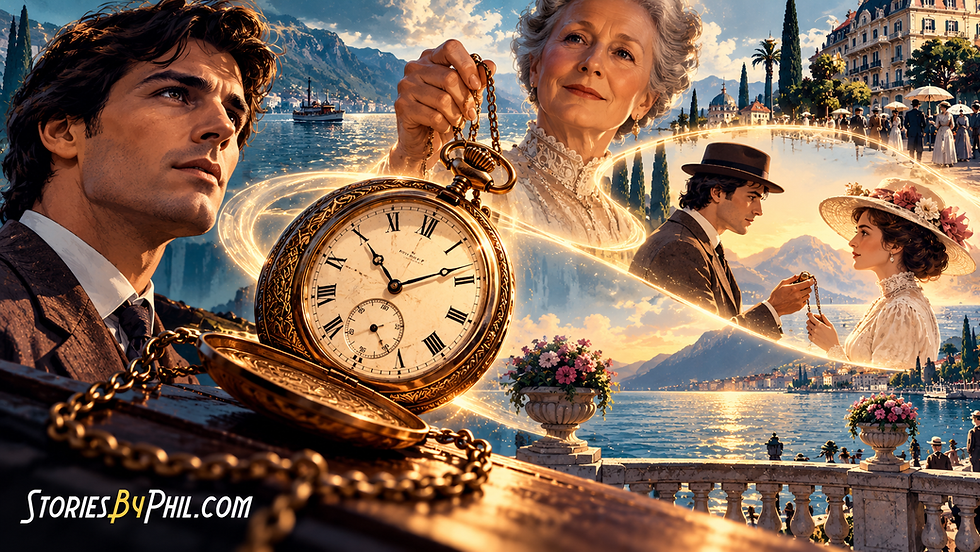
SOMEWHERE IN TIME: What Is a Bootstrap Paradox?
Somewhere in Time gives us a very different problem. An elderly Elise gives Richard a pocket watch. Richard later travels back to 1912, meets the younger Elise and gives the same watch to her.
Years pass. Elise grows old. Eventually she gives the watch to Richard, who takes it back to 1912 and gives it to her. So who originally bought the watch? Where did it enter the story?
It didn't.
The watch simply travels around a circle in time. That's a Bootstrap Paradox, sometimes called an ontological paradox: something exists inside a causal loop without an identifiable point of origin.
And the longer you think about that particular watch, the stranger it gets. Forget who bought it. How old is it? If the same watch keeps making the same journey through the loop, how long has the thing actually existed?
Suddenly a romantic keepsake has become a philosophical nightmare.
BILL & TED'S EXCELLENT ADVENTURE: Can the Future Cause Something in the Present?
Bill and Ted discover one of the most useful applications of time travel I've ever seen.
They're trying to rescue their historical guests from jail and need Ted's father's keys. They decide that after completing their history report, they'll use the time machine to go back and arrange for the keys to be somewhere their present-day selves can find them. Then they look, and the keys are already there.
Excellent.
Bill and Ted effectively make a promise to their future selves: we'll arrange this later, so we can benefit from it now. The clever part is the order of events. From Bill and Ted's perspective, the effect happens before the deliberate action that causes it.
Their future behaviour solves a problem in their present. Most time travel movies use temporal logic to make life horribly complicated. Bill and Ted use it to save time.
HARRY POTTER AND THE PRISONER OF AZKABAN: Can You Save Yourself in the Past?
Harry Potter sees someone across a lake save him and Sirius Black from the Dementors with a powerful Patronus. Harry thinks the mysterious figure might have been his father.
Later, Harry and Hermione use the Time-Turner and revisit the same events. Harry waits for the mysterious rescuer to appear. Nobody does. Then he realizes why.
He was the person he saw.
Harry casts the Patronus and saves his earlier self. But here's the important part: he hasn't changed the past. His future self was already there the first time.
When Harry returns to the event, he discovers his own role in something that has already happened. The time travel changes our understanding of the past rather than the past itself.
That's a useful trick for storytellers because the audience gets to experience the same event twice. The event doesn't change. Its meaning does.

TIMECRIMES: Can Trying to Prevent Something Actually Cause It?
If you're going to watch Timecrimes, I'd recommend not reading this section first.
Still here? Don't say I didn't warn you.
Héctor sees a mysterious woman through his binoculars, investigates, is attacked by a terrifying man whose head is wrapped in bloody bandages, escapes into an experimental machine and accidentally travels about an hour into the past. Now there are two Héctors, and things get worse from there.
Héctor gradually discovers that the strange events he experienced weren't simply things that happened to him. His attempts to intervene help create them. He becomes the bandaged attacker, while later versions of Héctor manipulate earlier versions.
The more he tries to deal with what happened, the more responsibility he assumes for making it happen. That's the nasty trick behind a predestination paradox: an attempt to prevent or alter an event becomes one of the causes of that event.
Harry Potter discovers, I was the person who saved me. Héctor discovers something considerably less comforting.
Maybe staying home and watching television wasn't such a bad option after all.
PRIMER: What Happens When Multiple Versions of You Exist?
Most time travel movies make the machine look like the difficult part. Primer makes operating it look like doing your taxes while performing brain surgery.
Abe and Aaron discover a way to travel backwards over a limited period. Initially, they try to keep things controlled. They isolate themselves while their earlier selves are still out in the world, use advance knowledge to make money and establish rules. Sensible fellows.
Then they keep using the machine.
Every backwards trip creates the possibility that a returned traveller will occupy the same stretch of time as an earlier version of himself. Then come secret journeys, failsafe machines, interference and multiple versions of Abe and Aaron carrying different information.
Eventually the real question isn't simply, What happened? It's Which version of this man knows what happened?
Two versions of the same person may have the same childhood, memories and face. But the moment one experiences something the other hasn't, they're no longer strategically identical. One knows more.
That's the distinctive temporal problem at the heart of Primer. Time travel doesn't merely duplicate people. It creates versions of them with different knowledge, intentions and advantages.
If you're confused while watching it, don't worry. So are the people who invented the machine.

EDGE OF TOMORROW: Is a Time Loop the Same as a Time Travel Paradox?
Not necessarily.
In Edge of Tomorrow, Major William Cage repeatedly experiences the same day. He fights, he dies, and he wakes up again.
The interesting thing here isn't a contradiction. It's accumulated experience. The day resets, but Cage doesn't. He remembers, and that transforms repetition into an advantage. He learns where the enemy will attack, improves his combat skills, changes his choices and gets a little farther. Then he dies again.
It's basically the worst video game save point imaginable.
This distinction matters because time loop and time paradox are often treated as though they mean the same thing. They don't. A time loop is a temporal structure in which events or periods repeat. A time paradox involves a contradiction, causal loop or other problem created by time travel.
A story can contain both, but it doesn't have to.
SOURCE CODE: Can Changing the Past Create Another Reality?
Source Code begins by giving us what sounds like a firm rule. Captain Colter Stevens can repeatedly experience the final eight minutes before a commuter train explodes, but he's told he cannot change what already happened. He's there to identify the bomber.
Think of it as forensic investigation with an extremely unusual replay button.
But eventually Colter does more than gather information. He prevents the explosion, and the world keeps going.
That suggests another way a time travel story can deal with paradoxes. Perhaps altering the past doesn't erase the future that sent you there. Perhaps it creates, accesses or reveals another version of reality in which events unfold differently.
Branching timelines provide a neat escape from the Grandfather Paradox. If you travel back and kill Grandpa in another timeline, you don't erase yourself because you came from a history in which Grandpa survived.
Of course, now you've murdered somebody else's grandfather. Time travel solves one problem and creates another. Again.
PREDESTINATION: Can a Person Become Their Own Paradox?
And now we reach the movie that looked at all of this and apparently decided it wasn't complicated enough.
Predestination follows a Temporal Agent whose life becomes increasingly entangled with a person called John, who was previously Jane. That sentence is already inadequate.
Jane and John are the same person at different stages of life. John travels into the past and has a relationship with Jane. Jane becomes pregnant. Their baby is abducted and taken farther into the past.
That baby grows up to become Jane. Which means the same person is, among other things, their own mother and father.
There is no conventional family tree.
There is a family circle.
Remember the pocket watch in Somewhere in Time? That movie gives us an object without an identifiable origin. Predestination applies the same problem to a human being.
Where does this person's genetic information begin? Who is the ancestor? There isn't one outside the loop. The person exists because the person exists.
At which point I think we're entitled to stop drawing diagrams and have a drink.
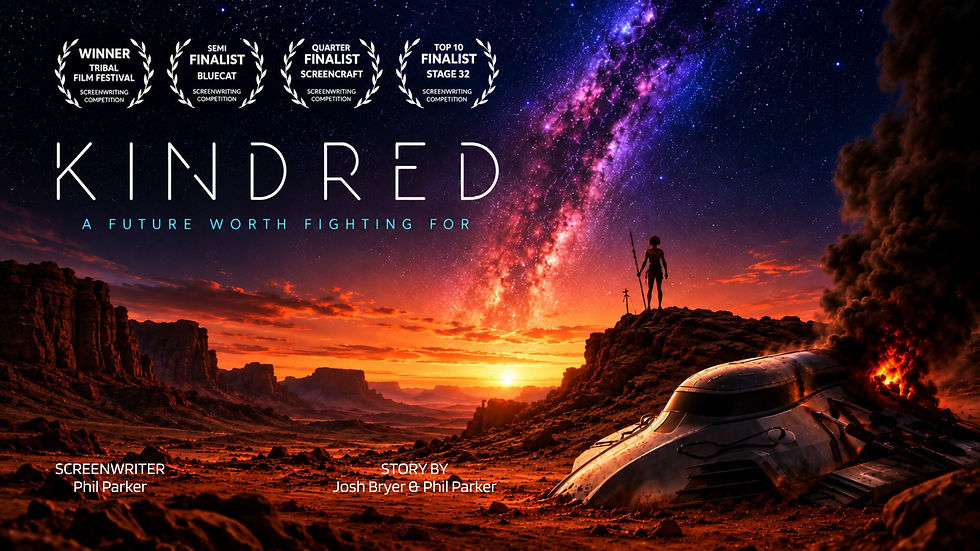
KINDRED: If You Know the Future, Can You Prevent It?
That brings me to the time-travel question that interests me most in KINDRED, an action/adventure screenplay I was hired to rewrite by at director at Red Centre Films.
A man is visited by his future daughter, who gives him an extraordinary advantage: foreknowledge. She tells him that the childhood tormentors he has spent his life avoiding will eventually kill him and enslave the world.
Now he knows what's coming. That knowledge changes his choices in the present. He knows who the threat is, he knows the consequences of doing nothing, and he has an opportunity to act before that future arrives.
But knowing the future creates its own uncertainty. Does acting on that knowledge prevent the future? Or does changing his behaviour help create the very future he's trying to avoid?
That's one of the things I find fascinating about time travel stories. Knowing what's going to happen doesn't necessarily give you control over what happens next.
Sometimes it just gives you something new to worry about.
Lear more about KINDRED, a time-travel action/adventure screenplay by Phil Parker.
